Feeds:
Posts
Comments

chocolatevictoriasponge2

Victoria sponge cake is a bit old-fashioned and not everyone wants to make them any more. The taste of a homemade sponge cake is totally different from anything else bought in a shop and it is not that difficult to make. It’s just like a giant cup cake. I hate that word ‘cup’ cake.

I can remember one Christmas our cooker blew up taking my mother’s eyelashes, eyebrows and a good chunk of her hair. Her only crime was to open the oven door. The gas board got the blame and I can remember coming home from school to find two ladies from the gas board in our kitchen making Victoria sponges. Apparently this was the tried and tested scientific method to see how the gas was performing in the cooker.

As a child I would know that a particularly good slice of Victoria sponge cake could be had at Mr and Mrs Thomas’s house, they lived in a house across from ours. Every afternoon on the dot of four Mrs Thomas a tall American lady who sported a short bob and always wore a tweed suit, would load up the wooden tea trolley and wheel it through to the sitting room where Mr Thomas would appear from his workshop in the garden to join her in their ritual cup of tea and solitary slice of cake. Mrs Thomas didn’t have children of her own and had a reputation of speaking her mind, which didn’t endear her to her fellow neighbours. She also did not take kindly to children save for a few exceptions. Guess what? I was one of the few exceptions, and would often sit quietly in one of their oversized armchairs whilst stuffing myself with tea and cake listening to the grown up chat with one eye on the chance of a second slice (it never came, but there was always hope). Once or twice I did take Mark who lived further up round to the French windows and we would stand and wait for the beckoning finger, sometimes we were beckoned and other times we were ignored. Tea and cake was never a certainty at the Thomas’s but yearning for something always makes it taste all the better.

Chocolate Victoria Sponge Cake with Chocolate Buttercream Filling

Ingredients

6 oz/175g unsalted butter

6 oz/175g caster sugar

3 eggs large beaten

5 oz/150g self raising flour

1 oz/25g cocoa powder

1 tbs warm water (optional)

Buttercream

2 tbsp cocoa powder

4 oz/100g softened butter

4oz/100g icing sugar

Icing sugar to dust or split the buttercream and put half between sponges and the other half on top.

Turn oven to Gas mark 4/180C/350F.

Beat the butter and sugar with an electric mixer until it is light in colour then mix in the eggs a little at a time – putting too much in will make the mixture curdle. If this happens add a tablespoon of the weighed out flour and keep mixing until it blends to a smooth consistency.

Sift the flour and cocoa powder into the bowl with the butter and sugar and fold it in. If the mixture is slightly heavy add the water. I mostly add the water but this time the eggs might have been a little larger so I didn’t add it.

Now divide the mixture between two 8-inch sandwich tins. Level with a knife and put both tins in the middle of the oven for about 20 minutes. In my gas oven I leave them for just over 25 minutes. All cookers cook differently so you need to check. I know when they are ready because when I gently push the top with my finger the sponge bounces back. Another sign is the sponge is slightly coming away from the sides of the tin.

Cool on a wire rack – don’t put the sponge top side down as it with appear with criss cross marks.

To make the buttercream soften the butter and then add the sifted icing sugar and cocoa and beat until smooth. If you find the buttercream heavy add a tablespoon of milk and beat this in.

Sandwich together the two halves and either sift icing sugar over the top or split the buttercream adding half in between the sponges and half on top, if you want to go further you could then add chocolate buttons.

Fish Balls

The weather has been dry but rather cold and I agreed to go with Charlotte for a brisk walk along the promenade for a bit of light exercise.  It seemed a good idea at the time.  What I didn’t bargain for was the bitter wind which constantly kept whipping my hair into my face and making it cling there, no sooner had I wrestled a strand back than another escaped lashing itself across my face.  We decided to turn around and walk the other way and into the path of the local fisherman, who every Thursday and Saturday sets up his van on a wide bit of pavement by the sea wall and sells his catch.  I am sorry to say I am not a regular customer because I have a husband who likes fish but not the bones.  He has a fear of getting one stuck in his throat.  Which is a shame as I love fish.

Luckily, he was busy serving another customer so I got to cast my eye over his offerings (no pun intended).  The fish looked fabulous and I made a impulse decision that today was the day I was going to buy.  When it was my turn to be served, having decided to go adventurous, the moment he asked me what I wanted, all I could hear myself say was ‘have you got any whole cod?’  It was too late I had said it, at least I knew Tom would eat it.  Over the years I have devised recipes that takes away the chances of him finding a bone.  Yet, if there is a bone to be found it always ends up on his plate.

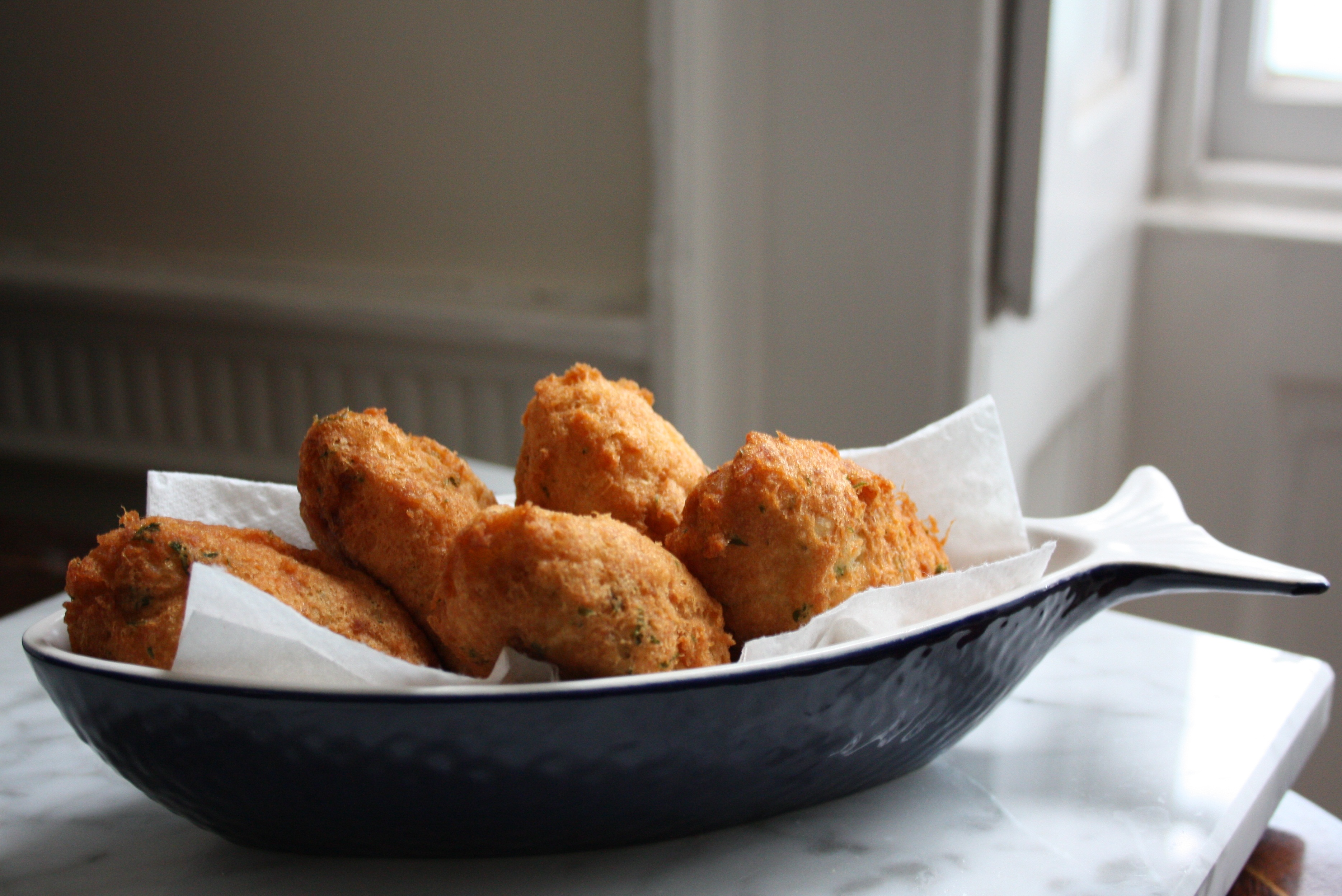
This recipe is based on the Portuguese recipe Bolinho de Bacalhua which uses salt cod instead of fresh.

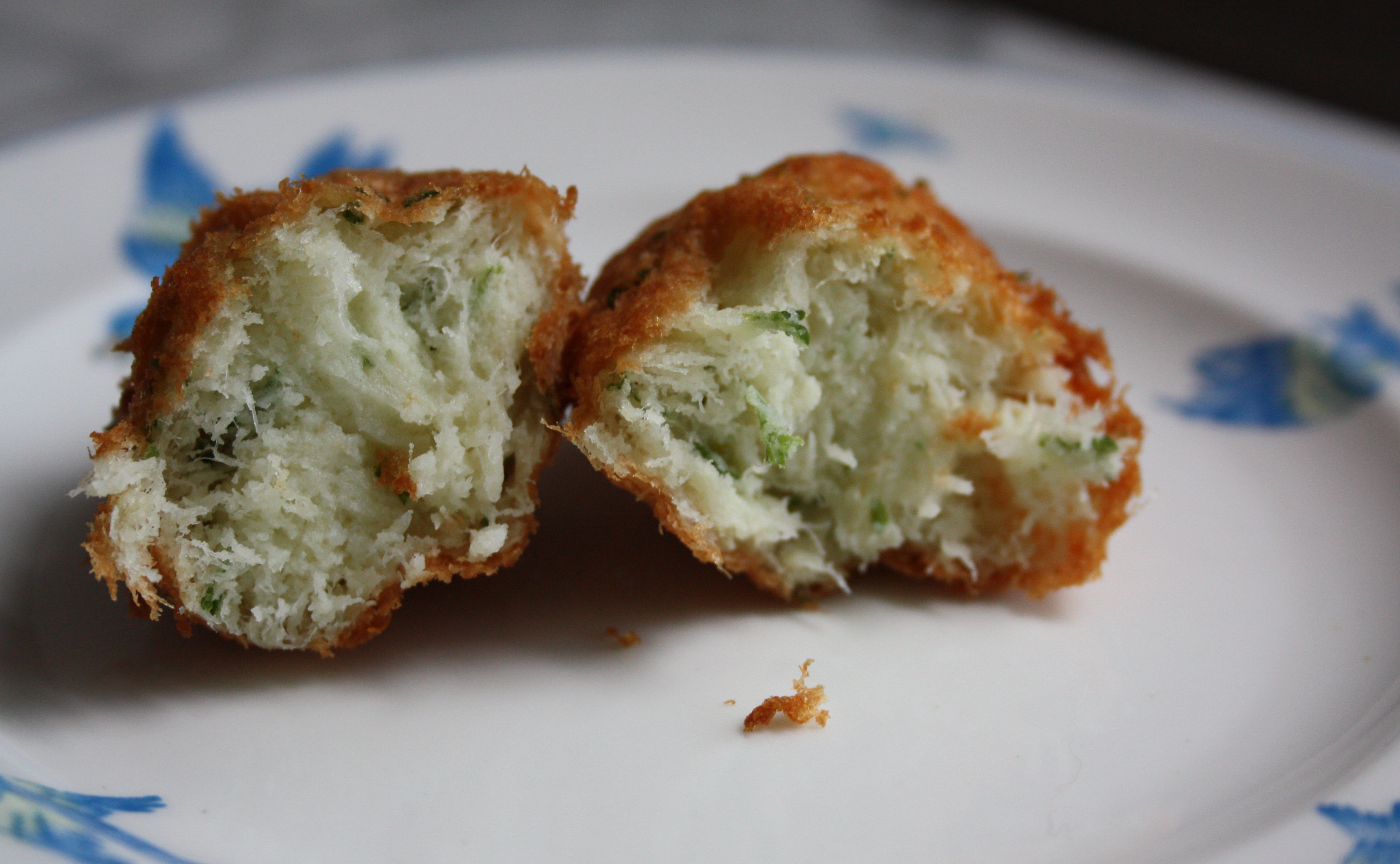
The flavour might not be as strong but these little fish croquettes have a lovely crispy outside and a soft light fluffy inside.

Bolinho de Bacalhua

1 lb /450gms cod

1lb /450 gms potatoes peeled

½ white onion finely chopped

2 cloves garlic finely chopped

3 tbs fresh parsley chopped finely

2 eggs separated

Oil for frying

Lime for serving

Place the cod into a saucepan and fill with water just covering the fish and bring to the boil, as soon as it starts to boil switch off the heat with lid on and leave for 5 minutes.

Drain the fish and let to cool before flaking the fish, taking out any bones and removing any skin.  Set aside.

In another saucepan boil the peeled potatoes until tender and drain, leave to stand for five minutes in a colander so that any water has a chance to evaporate.  Put the boiled potatoes through a ricer or press through a wire sieve.  You could use a potato masher but the result is not as light.  When cooled add the 2 egg yolks and set aside.

In a frying pan put 1 tablespoon oil and gently fry the onion adding the garlic and fry until translucent but not browned.  Now add the fish and stir through.  Remove from the heat.  Add to this the parsley and season with salt and pepper.  Stir well, incorporating all the ingredients evenly.

In a clean bowl whip the egg whites with an electric mixer until soft peaks form.  Add this a third at a time to the fish mixture.  Gently folding in making sure that it is well combined.  Add a little more egg white and fold in until all the egg white is used.

Put this mixture into the fridge and leave for 30 mins or longer.  This will allow the mixture to chill and make it much easier to handle.

Remove from the fridge and roll into small balls or make quenelles with two spoons, take a heaped spoon of mixture and with the other spoon firmly push the mixture off, repeating this a couple of times until you have a smooth quenelle.

To fry fill a pan with at least 2 inchs of sunflower oil.  The oil is ready when a tiny bit of fish mixture is dropped into the hot oil and it floats to the top.  Gently drop into the oil the quenelles.  (I found that I could cook 3 quenelles at a time).  Turn them over regularly so that they have a even colour.  Once golden brown drain and place on kitchen paper put the next batch in and while they are frying place the cooked quenelles in the oven to keep warm.  Gas mark 3.

Serve with mayonnaise and a wedge of lemon

.

I love making choux pastry.  To me its quick and easy and I usually have the ingredients without buying anything in.  Like most things I cook over and over again, I have strong memories attached to choux and it always reminds me of the day I got my grandmother’s adoration.

My grandmother, who lived in Athens, would spend a couple of months every winter with us in England before we joined her in Greece for the summer.  Born in Athens, she was one of nine children.  Her parents were very keen on education and sent her away to a French convent until she was eighteen.  I don’t think they did home economics because she couldn’t even boil an egg but did do the most fabulous embroidery.

She married and set up home in Athens and employed an Arab cook who she let run the kitchen.  She was very interested in food but had no interest whatsoever in cooking.  After the war, life changed and she was left in the house alone with only her maid and housekeeper.  It was only after a nasty burglary that she decided to shut up the house and move into the swishest hotel in central Athens, famous for its roof top restaurant and there she stayed for more than sixteen years until she died.

Whilst she loved good food she also had a rather unfortunate reputation for sending things back to the kitchen, for she had a very keen eye and would know if the vegetables were over cooked, or if they were old, or the meat was tough.  She was known to pay a visit to the kitchen to inspect the catch of the day before choosing the fish she wanted cooked.  God help them if they ruined it.  She was known as a very generous tipper.  Even though her regular waiter was a nervous wreck when she appeared in the restaurant, he insisted on serving her for more than twenty years, being very protective of her custom.  Many years after her death I ate in a restaurant where she was remembered fondly with respect.  We laughed at her strict ways and how nervous her waiter Spiro would be when she arrived.   Praise was something given by my grandmother only when it was earned.

So, many years ago when I returned home from school economics with a Tupperware box full of choux pastry éclairs filled with cream and covered with chocolate – she was impressed, so impressed that when I went into the kitchen to sample my delights I found she had eaten the lot.  From then on, every Tuesday when I returned from school she would be eager to know what I had cooked and would remind me how fabulous my chocolate choux éclairs were.  Sadly, nothing matched the heady delights of those first choux éclairs.  The choux éclairs  may be long gone but her praise is still remembered and cherished.

Gougères make an impressive canape without too much fuss.  I have made them plain with just the cheese folded in and a pinch of cayenne or with the addition of a filling of smoked trout pate.  Sometimes I make double the quantity of choux and split the mixture, with one half I fold in the cheese and with the other I bake plain balls which I then fill with cream and top with caramel and toasted almonds.  Savoury and sweet in one recipe.

Gougères

Choux Pastry

Ingredients

Makes about 24 balls

125 ml of half milk and half water

50 gms unsalted butter

75 gms plain flour

2 whole eggs

pinch of salt

60 gms finely grated cheese (I use gruyere)

large pinch of cayenne pepper

Method

Sift the flour and salt twice onto a plate.

Pre heat the oven to 180c/350f/gas mark 4

Put the water, milk and butter into a saucepan and heat slowly, you don’t want the water to boil before the butter melts.

Once the butter has melted bring the water to a brisk boil, remove from the heat and tip in all the flour and pinch of salt at once.  Using a wooden spoon beat the mixture until it forms a ball and leaves the sides of the pan.  At the beginning it doesn’t look like it will ever thicken up but within seconds there should be a ball of paste.  Return the pan back to the heat and roll the ball around for a minute or two to dry it out.

Remove from heat.  Don’t put your eggs in immediately, as they will scramble.

When the pastry has cooled a little start to add the eggs, one at a time, no prior beating necessary.  At this stage I use an electric mixer, once the egg has been combined add the next one and beat again.

Beat the mixture for a minute or two more, it will slightly thicken and become glossy.

Add the majority of the cheese and cayenne pepper and mix well with the wooden spoon, holding back a little cheese to sprinkle over the top of the balls.

Put into a piping bag and pipe small balls onto a baking tray lined with baking paper.  This can also be done by using two teaspoons – the results will be a little more rustic but they will taste just as good.  If there are little peaks dab them down using a wetted finger.

Cook for 20-25 minutes.  At 20 minutes I check to see how they are colouring, at this point they should have risen and should be firm to the touch.  I leave them in the oven until they have all got an overall golden brown colour. Usually another 5-10 minutes.

Transfer to a wire rack to cool.

Serve either warm or cold but they need to be made and eaten on the same day.  Sometimes I serve them as they are or sometimes I fill them with smoked trout pate using a icing bag and making a small hole in the side of the ball I pipe in some pate.

I sometimes double up the quantity and fill a second piping bag that is left until the oven is free for the next batch.

Christmas Cake

Every year I use the same recipe for my Christmas cake.  This is a well tried and tested recipe perfected over many years.  One year I tried five different recipes.  After much debating and tasting we whittled it down to one and then improved on it.  The family like it and that’s good enough for me.

When I was a little girl my mother had high hopes for her Christmas cake.  Cake icing was not a skill she possessed but each year she approached the task of icing the Christmas cake with new hope and vigor, thinking that this year she would create the perfect iced cake.  Each year the cake would be presented with an iced snow scene adorned with small fir trees, an overfed robin, and several patchy reindeer, topped off with the piece de resistance – the shop bought frayed red ribbon.

Achieving the snow scene was a torturous journey for both my mother and me.  It would start with the mixing of the royal icing. I would sit silently at the kitchen table watching.   This phase usually passed in a fairly upbeat mood, then the palette knife would make an appearance and my mother would attempt her foray into cake icing nirvana, kidding herself that the icing would just glide on and be perfect.   As each layer went on, the more uneven the cake became.  My initial encouragement of how good it was looking would soon dry up and a murderous tension could be felt in the air, at this stage I readied myself to flee.

In a last ditch attempt of redeeming things my mother would then move onto the icing syringe which was filled to the brim with royal icing, again she would struggle and labour over trying to squeeze out perfect shapes as demonstrated on the cover of the box but to no avail.  When eventually my mother realised she had been beaten, the palate knife re-appeared and with a few swift hand movements we were back to plan B; the snow scene.    Having stuck by my mother during her icing ordeal I would be rewarded with the task of pushing the aged but much loved cake ornaments into the deep waves of royal icing before it was finished off with a red ruff and, put on a raised dish and placed in the dining room, ready for Christmas.

My mother’s Christmas snow scene may not have been perfect but it has become a fond memory I hold with great affection along with those worn Christmas cake ornaments.

I have said it before and I will say it again recipes evolve because people change them.  If I don’t like currants, I leave them out and add the same weight in raisins.  If I don’t like cinnamon I don’t add it.  I am a big fan of cherries but I sometimes swap them for more apricots.  There are no hard and fast rules.

Christmas Cake

or

Rich Fruit Cake Recipe

Ingredients

Stage One

Ingredients

225g/8 oz currants

225g/8 0z raisins

225g/8 oz sultanas

50g/2 oz dried apricots chopped small

175g/6 oz glace cherries cut into quarters or halves depending on how I am feeling.

100ml/4 floz brandy

Method

Pick over the fruit for any stalks this might not seem important at this stage but I hate eating a piece of cake and getting a bit of stalk stuck in my teeth. 

Put all the fruit into an airtight dish and add the brandy.  Stir well to blend, seal and leave. 

I tend to leave mine in a dark cupboard for two weeks or more, stirring the fruit every week or so.  The smell is fantastic and after two weeks the fruit has plumped up beautifully.

Ingredients

Stage Two

50g/2 oz blanched almonds chopped roughly but small

50g/2 oz brazil nuts chopped roughly but small

225g/8 oz butter

225g/8 oz soft dark brown sugar

4 eggs

225g/8 oz white plain flour

5ml/1 level tsp ground mixed spice

 ½ level tsp ground cinnamon

Greaseproof paper

string

brown paper or an old large envelope

Method

Draw around the bottom of your 8″ cake tin on top of a double layer of greaseproof paper, cut out the circles and line the bottom of the cake tin with these.

Cut a length of greaseproof paper this is going to line the inside of the tin, this needs to be folded in half and placed inside the tin it should be raised above the height of the tin.  Then cut a length of brown paper folded over to go around the outside of the tin again raised above the height of the tin.  This is to help the cake from burning.  A little like a sun shield.

The oven needs to be set at 150C/300F/Gas Mark 2.

Soften the butter and beat until soft and pale, now add the sugar and beat well until it is all blended.

In a measuring jug beat the four eggs and begin to pour them into the mixture a little at a time, beating constantly.  If the mixture begins to curdle add a tablespoon of flour and keep beating until it goes back to a smooth consistency.

Add the flour, mixed spice and cinnamon, and using a metal spoon gently fold into the mixture.  Add the fruit and the chopped nuts.  Using the metal spoon continue to fold in gently.  If the mixture for some reason seems dry or heavy, add 2 tbsp milk.

Spoon the mixture into the cake tin and smooth the top with the back of the spoon making a slight dome in the centre.  This will help the cake to bake level.

Bake in the centre of the oven 150C/300F/Gas Mark 2 for 3 ½  hours.  I either write down the time I put the cake in or use the timer.  It’s important to get the timing right.  After 3 1/2 hours check the cake with a skewer.  If it comes out clean then it’s done, there is a lot of brandy-laden fruit in the cake so I look closely that it’s not fruit sticking to the skewer.

When the cake is done do not remove from the tin but allow it to sit until it is completely cold and then unwrap.  The cake will keep for three months but it needs to be wrapped in greaseproof paper and then foil and tightly sealed.  I then place the cake in a plastic bag, which is tied, and then into an airtight container.

I prefer to bake my cake in the middle of November to give it some time to mature.  I do not feed the cake with brandy after I have baked it.  I prefer to use the brandy to pump up the fruit.   I then cover the cake with marzipan and fondant icing.

I have also made this without marzipan and icing and instead have decorated the top with whole almonds and cherries, which I put on just before putting the cake in the oven.

If covered in the marzipan and icing it will stand being left on display which I do once it has had it final decoration but once its been cut I store it in an airtight container.  It will keep for ages like this.

Christmas Pudding

I can’t remember a Christmas Day meal when there hasn’t been a Christmas pudding served.  As a child I would always feel the pudding was the anti-climax of the whole day, as it was my least favorite of the Christmas fare, not being a big fan of anything that contained dried fruit.  The only reason I eagerly agreed to a slice, was the hope of winning the hidden gold coin.  My mother would always put a gold sovereign in the pudding.  Over the years it dawned on me that this task was always done in the kitchen, followed by the warm brandy being poured over with my mother carrying it to the table before setting light to it.  The concentration my mother exerted over this task was not the fear of dropping the said pudding but to keep a vigilant eye on where the sovereign was embedded.    It has taken many years to realise the whole thing was fixed and my chances of ever winning the much sought after coin were nil.  My mother like a magician had full control of where the coin was and who would win it.  Trusted family members and my father were high on the list.  Needless to say, after the meal, the coin would be whisked away, and no doubt put in a safe place until the following year.

My tastes have changed and matured over the years and I have perfected my own recipe, without suet.   This makes the pudding much lighter.  Instead of the traditional brandy butter I prefer a large  helping of clotted cream  Gold sovereigns are not so plentiful these days so I have replaced it with silver sixpences which I have no idea where in the pudding it is and who ever wins them gets to keep them.  I wrap each one is silver foil for hygiene and push them into the pudding just before serving, and each year there is a fresh batch of coins.

Christmas pudding

I usually make this around September to give it time to mature but I have also left it the week before Christmas.

Ingredients

50 gm/2 oz blanched almonds

50 gm/2 oz walnuts

50 gm/2 oz brazil nuts

75 gm/3 oz carrots

75 gm/3 oz pitted no soak prunes

125 gm/4 oz butter

1 lemon

125 gm/4oz soft dark brown sugar

2 eggs beaten

350 gm/12 oz mixture of seedless raisins, currants and sultanas (I don’t always put 125 gm/4 oz of each in I sometimes put more of one fruit depending what I have in the cupboard, as long as the total weight is 350 gm).

25 gm/ 1 oz chopped glace cherries

50 gm/ 2 oz fresh brown breadcrumbs

125 gm/ 4 oz wholemeal plain flour

50 gm/ 2 oz white plain flour

15ml/ 1 level tablespoon mixed ground spice

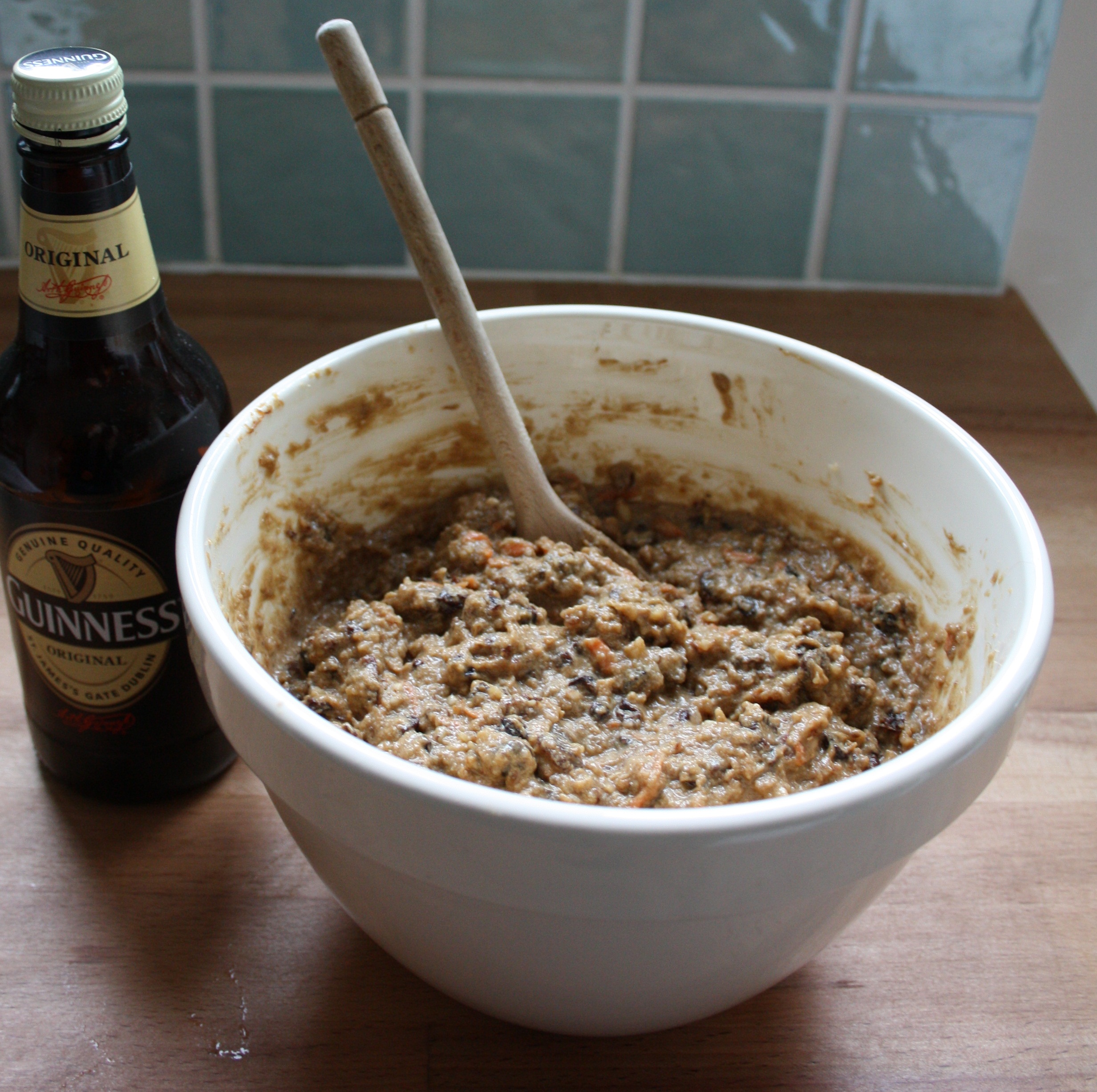
200 ml/ 7 floz Guinness

30 ml/ 2 tbs brandy

30 ml/ 2 level tbs black treacle (leave a tablespoon in a cup of boiling water before measuring out, the treacle will slip off the spoon).

Method

  1. Roughly chop all the nuts, either in a food processor or by hand.  Coarsely grate the carrots and cut the prunes into small pieces, this is much easier to do if you use scissors.
  2. Beat the butter and lemon rind until soft then gradually beat in the sugar followed by the beaten eggs.  Mix in all the remaining ingredients and stir well.  At this point our family tradition is that each person comes and gives the pudding a stir and makes a wish.  When the stirring is complete cover and leave in a cool place overnight – NOT the fridge.
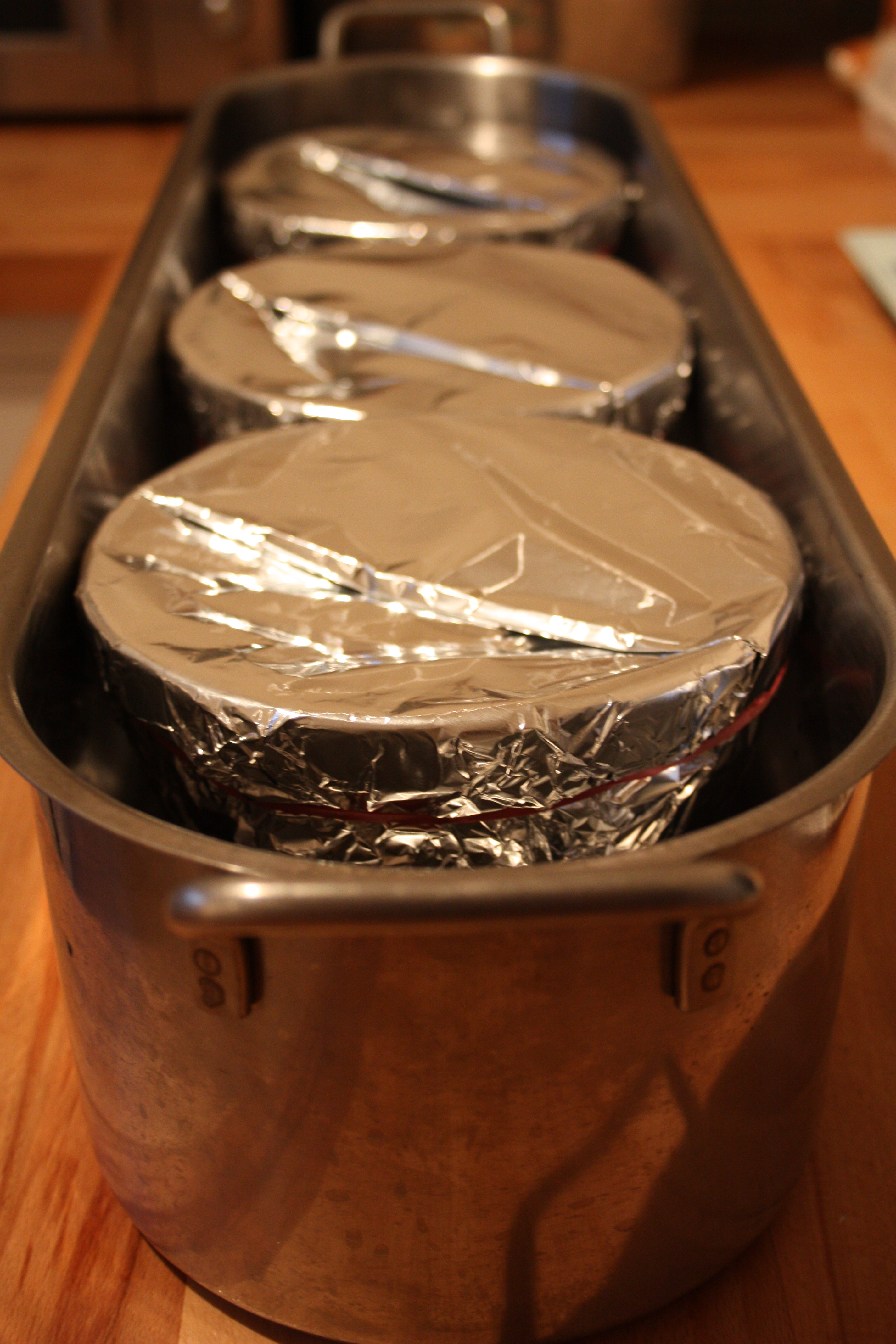
  3. The following day grease a 2 ½ – 2 ¾ pint (1.4-1.6 litre) heatproof pudding basin this is to make it easier for the pudding to come out after cooking.  Beat the pudding mixture again and spoon it into the basin.  To cover, cut a piece of grease proof paper and a piece of foil, place these on top of each other and fold a central pleat down the centre, place this over the top of the pudding and tie securely. After years of struggling with bits of string slipping, I like to use a strong elastic band.
  4. Steam the pudding for about 6 hours in a large saucepan filled with enough boiling water to come halfway up the sides of the basin.  Do not stand the basin directly in the pan put it on top of an upturned plate, – cover and boil for about 4 hours, checking that the water has not boiled dry and if needed top up with boiling water from the kettle (as I like to make several pudding I use my fish kettle).  When done cool the pudding completely and re-cover the basin with fresh greaseproof paper and foil securing with a fresh elastic band and refrigerate for up to 2 months.  Some say that left in a cool place the pudding will last from one year to the next.  Although its not essential (but it adds to the whole Christmas traditional theme) I cover the cooked pudding when cooled with a square of muslin tied with a handle so its easy on Christmas day to put into the steamer and lift out but this is optional.
  5. On the day of eating, steam the pudding for about 3 hours, then turn out onto a warm serving plate.  Warm about 60 ml/ 4 tbs brandy in a small saucepan and pour over the pudding and set alight. The warming helps the brandy to light.  Depending on the year I sometimes dispense with the flaming brandy and replace it with sparklers or an indoor fountain firework.  These last a little bit longer.  The pudding can be served with either brandy butter, brandy cream or my choice of clotted cream.

If there is any pudding left over, I wrap it up in silver foil and put it in the fridge until Boxing day when we slice it up and  warm it through by putting a generous amount of butter into a frying pan and frying it.  Again served with some clotted cream.

Meringues

There seems to be a bit of a mystery about making meringues and they have the reputation of being difficult to make. Perhaps because they are so easy, those in the know are keeping the secret to themselves.  I always think that most recipes can be adapted but this is one that needs to be mastered before you tinker with the ingredients.  After all there are only two ingredients to them and the real secret is in the beating – if a secret at all.

These were my brother’s favourite sweet.  When I was a child my older brother was seriously ill and had spent several years in hospital, then towards the end of his stay he would be allowed home for the weekend.  Of course everything at home had to be perfect for these weekend visits.  All his favourite meals were prepared and an order to the local baker would be placed for a box of fresh cream meringues. These involved two plump oval meringues sandwiched with fresh cream topped with a cherry, a sprinkling of nuts and then packed with five others into a white cardboard box, which was then tied up with red ribbon.

hen Saturday came I would be duly despatched to go and collect them.  This for me would entail a dawdle on the way there, taking great interest in the plants along the hedgerow and a short fantasy – I was a bit of a dreamer as a child so would invent all sorts of scenarios with me being the heroine of the day. Other Saturday pick ups might involve a detour to the swings, but I knew once the precious box of meringues were collected it was straight home with only a very slight hope of getting a taste of one of these delicacies.  Of course there was not a hope in hell, for my brother would wolf the lot down in one.  Even when I went to the bakers with my mother, and was asked which cake I would like, I often pointed to the fresh cream meringues only to be told they were too fancy and sophisticated for a little girl like me, no mention that they were fine for my big brother to wolf down in one!

My Meringue eating brother Rudy

As the years rolled by these remained my brother’s favourites, and whenever I visited him I would always make him a box full, and he would never disappoint me in wolfing the lot down in one without a morsel offered my way.

So like a lot of food we eat and things we smell, making meringues always reminds me of my brother Rudy and the sheer gluttony he had for them.

Meringues

Ingredients

Whites of 2 eggs

4 oz caster sugar

1 oz granulated sugar

Oven needs to be turned on to Gas mark 1/4 /225F.

Wipe the bowl you are putting the egg whites in – there needs to be no trace of grease.

Beat these until stiff and peaky.  Add some of the caster sugar and beat again and keep adding until all the sugar has been used up.  I normally beat these on medium speed on my Kenwood mixer or fast speed on my hand held mixer for at least five solid minutes.  The mixture will turn into a glossy creamy texture and when you lift the mixer blades out the egg whites should form stiff white peaks that don’t collapse.

At this point add the granulated sugar and fold into the mixture.

A baking tray needs to be lined with greaseproof paper (to hold the edges down just dab a little of the meringue mixture on each corner and it will stick the paper to the tray).

You have two choices here, either put the whole mixture onto the greaseproof paper and with a knife mould into a round disc, drawing the edges up to form a sort of bowl or put the mixture into a piping bag and pipe ovals of meringue onto the paper (should make approx 16) or use two dessert spoons, one to form the oval and one to push it off the other spoon.

Bake in the oven for 1 ½ hours.  Remove from the oven, carefully separate them from the paper, turn them upside down and return to the oven for a further hour.

Transfer to a wire rack and cool.

Meringues store well in an airtight container but they are best eaten at their peak, which is just cooled from the oven.

Chicken Pie

This is a quick and easy way to use up leftover chicken from a Sunday Roast.  It doesn’t have to be chicken, turkey would do.  Sometimes when I don’t have any left over roast chicken and I have a yearning for chicken pie, I just poach a chicken breast in a saucepan with some stock instead.

Leeks give the dish a little lift whereas onions would overpower the chicken.  They also give a little bit of colour too.  I sometimes replace the leeks with a sliced red pepper.  This is an easy recipe which can be played around with.

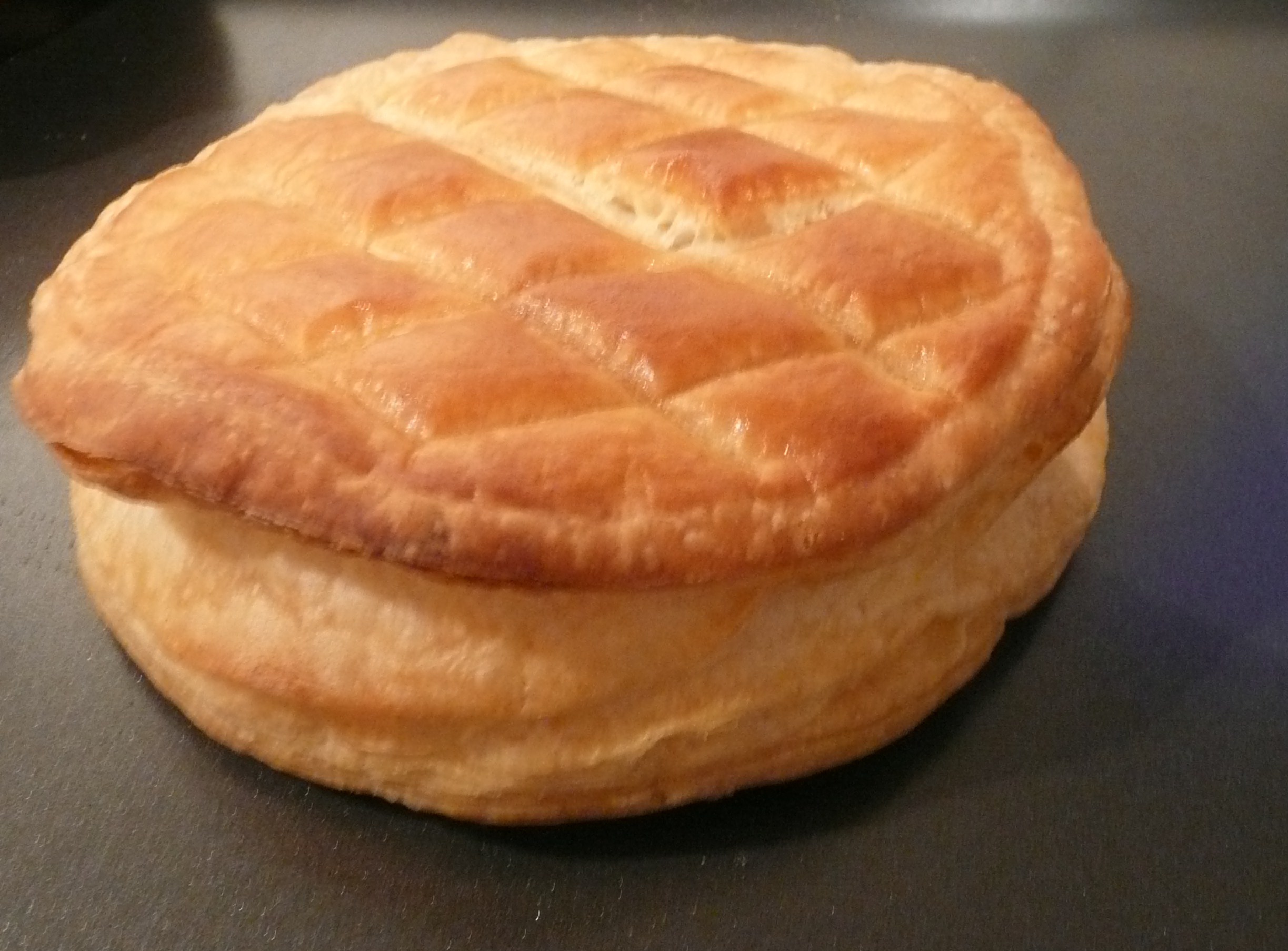
I also like to cook my pastry separately on a baking sheet as I like the pastry crispy all the way through.  This meal in some ways is a bit of a cheat because it can be put together very quickly.

I used a rough puff pastry recipe but you can also use frozen or fresh pastry from the supermarket.  Like everything else, homemade always tastes better.

Chicken Pie

Ingredients

Cooked Chicken (I used one breast left over from the roast and some extra meat from the carcass)

1 Leek trimmed top and bottom, washed and chopped into discs.

1 ½  oz butter

1 ½  oz plain flour

1 tsp Dijon mustard

salt and pepper

½ pint milk or a little more depending on how thick you like your sauce

½ lb mushrooms sliced

a small amount of butter or oil to fry the mushrooms

If you wish you could add sweetcorn to pad out the chicken.

Method

In a saucepan melt the butter then add the leek.  Using a wooden spoon stir and gently separate the leek rings so that they cook uniformly.  Do not let them brown you need them to soften.

Add the flour and stir leave on a low heat for a few minutes so that the butter incorporates the flour and the taste of the flour is cooked out.

Add the milk a bit at a time stirring continuously and bring to a gentle boil.  The sauce should be custard like and smooth, if not take the pan off the heat and give it your best spoon action until all the lumps have been beaten out.  If you want a looser sauce then add a little more milk.

In another pan add a little butter or oil and fry your mushrooms.  To keep their shape more cook on a medium heat.  When coloured slightly remove and drain and add these to the sauce along with the chicken and mustard. Add salt and pepper to taste.

Empty out into a pie dish and depending how you wish to cook your pastry either cover the dish with pastry or foil and place in the oven Gas mark 7/220c for 40/45 minutes.  I put the chicken warm from the pan on the middle shelf and the pastry on a baking sheet on the top shelf.  When the pastry has gone golden brown it is generally an indication that the pie filling is also done.  As the chicken is cooked already all you are doing is fusing the flavours.

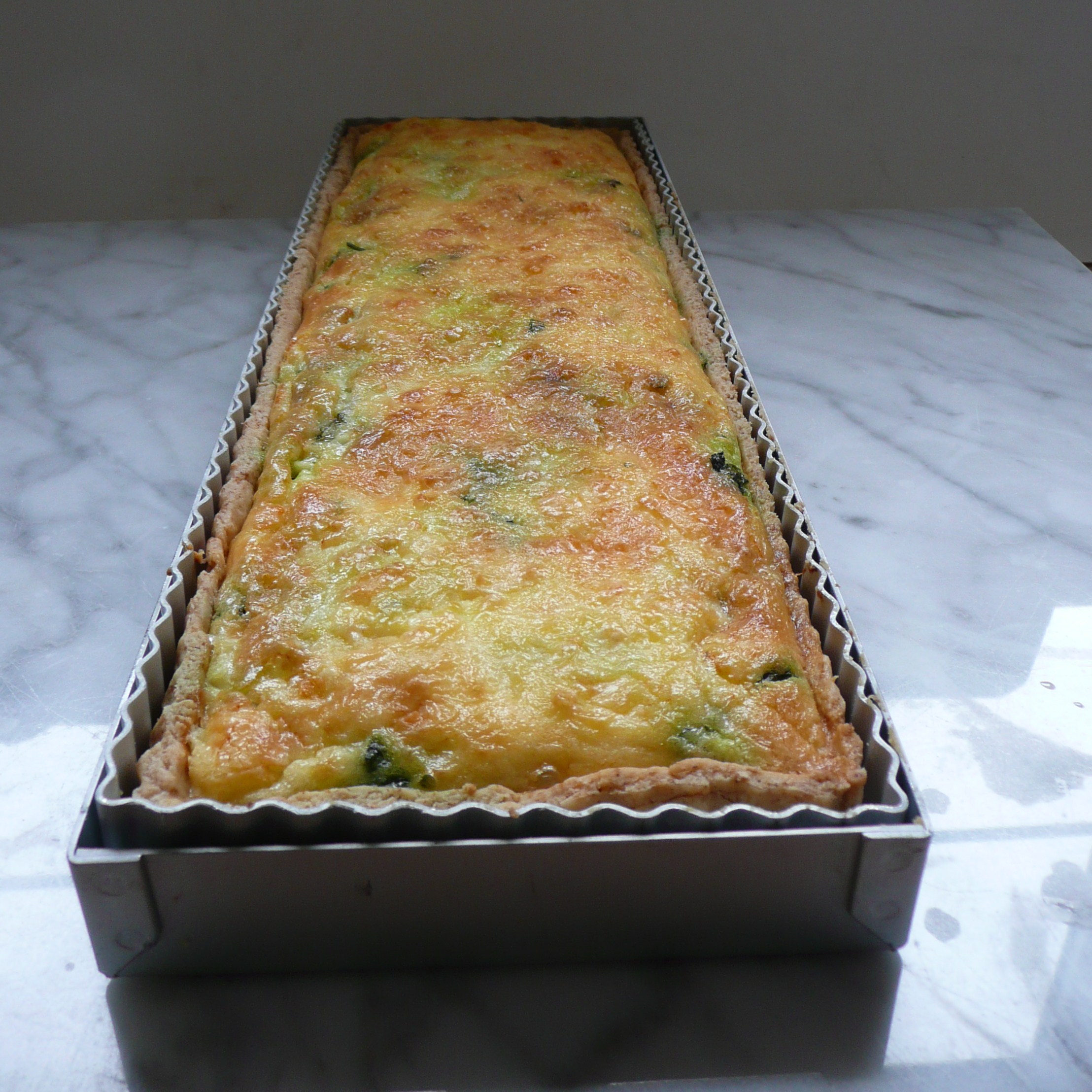
Spring is here and so is the Quiche and Flan season.  There is something about serving a Quiche in winter that doesn’t seem right.  It’s a summer dish – maybe it’s because of the sunny yellow that comes through from the eggs and cheese or maybe because its best suited to serve with salads, I just don’t know.  Quiche in winter just seems so wrong.    Neither do I know which title to give my little dish, is it a Tart, Flan or Quiche?

Quiche is so easy – I always seem to forget this little fact.  I have made the pastry in the morning, lined the tin with it and left it in the fridge until the evening when I have taken it out, blind baked while making up the filling.  The added bonus it can be eaten hot or cold so another meal is taken care of for the following day.  I have also taken it on picnics – the secret being to keep it in the flan dish so it doesn’t break up in transit.

Watercress Flan/Quiche/Tart

Ingredients

75g/3 oz plain flour

75g/3 oz wholemeal flour

pinch of salt

40g/1 ½ oz butter

40g/1 ½ oz lard (may not sound appealing but it does improve the pastry)

2 tbs grated Parmesan cheese

1 egg yolk

Iced water to mix (I used 2 mean tbs water)

Filling

25g /1 oz butter

1 bunch spring onions chopped

1 bunch watercress finely chopped

3 eggs

142ml/5 fl oz soured cream (I couldn’t get soured so squeezed some lemon juice into double cream)

125g/4oz cheddar cheese grated

My method is to throw into a food processor the flours, salt, butter and lard and whizz for a minute.  If the mixture does not resemble  fine breadcrumbs whizz again for 30 seconds and check again.  Add the Parmesan and give a ten second whiz to mix.  Add the egg yolk and a little iced water (I used 2 small tablespoons) and whiz again until it forms a ball in the processor.

Roll out onto a floured board and line a 8 inch flan dish.  Push the pastry into the fluted edges of the dish.  Prick all over the pastry with a fork and place in the fridge for a minimum of 30 mins.  Longer is better.  Pricking the bottom and sides with a fork will prevent it from bubbling as it bakes.  It’s not the end of the world if the flan dish is 7 inches or oblong in shape.  The fabulous thing about pastry is that if there is any left over that would be enough to make a small tartlet;  wrap it in a freezer bag and place into the freezer and use when needed.

When the pastry has had the required rest, remove from fridge and line the flan with greaseproof paper or foil and weigh down with dried beans and cook for 12-15 mins at Gas mark 5/190C/373F.  Take out and remove foil/greaseproof paper and beans and put back in the oven for another 5 mins.

Then melt the butter in a pan and add the onions and cook for 5 mins not allowing them to burn.  Stir in the watercress and cook for 2 mins until wilted.

Beat the eggs and soured cream together;  add the cheese salt and pepper.

Spoon the onion and watercress into the flan, you will need to use a fork to spread out the mixture evenly then pour over the egg mix and return to the oven for 20-25 mins until golden brown.

Serve hot or cold.

I love to eat this when it’s cooled.  I have also found that if I put it in the fridge after its got cold the pastry tends to tense up and becomes a little bit firm.  So I tend to eat it within 24 hours and try to avoid putting it in the fridge.

Rough Puff Pastry

When I was at school we were taught Home economics which included all the basic skills to run a home.  Some of the lessons proved not very useful but others did such as rough puff pastry.  It’s a recipe that can be used in so many ways.  Savoury or sweet and is much easier and much much nicer than anything bought.

Sausage rolls made with rough puff pastry was one of the delights that returned home with me from school after a hard afternoon at the home economics hot house that was known as Santa Maria.  Home economics took up a whole afternoon and we had a choice each term of sewing or cooking.  We all looked forward to those afternoons because they were easy and laid back.

Santa Maria was a detached slightly shabby Victorian house that sat alone in woodland.  We would have to cut across a couple of playing fields to get to it and of course none of us rushed.  So, straight after the lunch register we were free to make our way over to Santa Maria on our own.  We would break up into small groups of girls and take our time finding fresh interest in the surrounding flora and fauna.  A couple of the more flighty ones would disappear off for a smoke.   There was no register taking at Santa Maria so not everyone felt obliged to turn up.

The house itself was lovely;  there was a large light hallway with a large wooden staircase, which no one seemed to go up, what went on upstairs was a mystery to us girls.  The main bay fronted room to the front was the sewing room and the cooking went on in the kitchen and pantry area.  We were split into twos and worked at little tables.  The recipe and instructions were read out to us and we would have to write this down in a notebook in pencil and then work from this.  I wish I had kept my little instruction books as everything was so precise and had a reason.  We also used to doodle hearts with our names plus the boy of the moment on the inside of the covers maybe imagining how blissful married life would be cooking and cleaning for the chosen one!!

Rough Puff Pastry

8oz / 225g plain flour

Pinch of salt

5oz / 140g unsalted butter cut into little squares

Very cold to icy water

Sift the flour and the pinch of salt into a bowl.  Add the butter squares.  Without rubbing in the butter add the water – there is no real measure you will need to add the water a tablespoon at a time.  Start by adding 4 tablespoons and if the mixture doesn’t blind together add another – remember you can add water but you can’t take it away!

Use a knife to incorporate the water and then use your hands, knead very lightly you just want to bring the ingredients together to form one ball.

Wrap the pastry and let it relax in a fridge for 10 minutes or longer.

After ten minutes take the pastry out and on a floured board and a floured rolling pin roll the pastry into a strip 12” x 4” or 30 x 10 cm.  Take this stage slowly and remember to roll away from you.  Don’t roll back and forth just press down firmly with the rolling pin and push away trying not to over stretch or break the pastry.

Now turn the pastry so it is in a long strip in front of you, fold the left side over and then the right side over this so it’s like a book.  Keeping the pastry with the fold to your left roll out again to 1/2”/1 cm thick.  Now fold this again in three and put wrapped in a freezer bag in the fridge to rest for 15 minutes or more.

Repeat the same process again by rolling into a strip and folding over twice.  Place back into freezer bag and into the fridge to rest for 15 minutes or more.

Roll and fold again one more time.  The pastry should be flexible and there should be no big streaks of butter showing.

Roll into shape and rest once more before cooking.

I prefer to cut my pastry into a pie shape or if I wanted to be posh a chapeau and cook it on a baking tray adding it on top of my pie filling when cooked.

If you use an egg wash on the top don’t brush it all the way across to the edge as this will seal the edge and stop the pastry from rising.

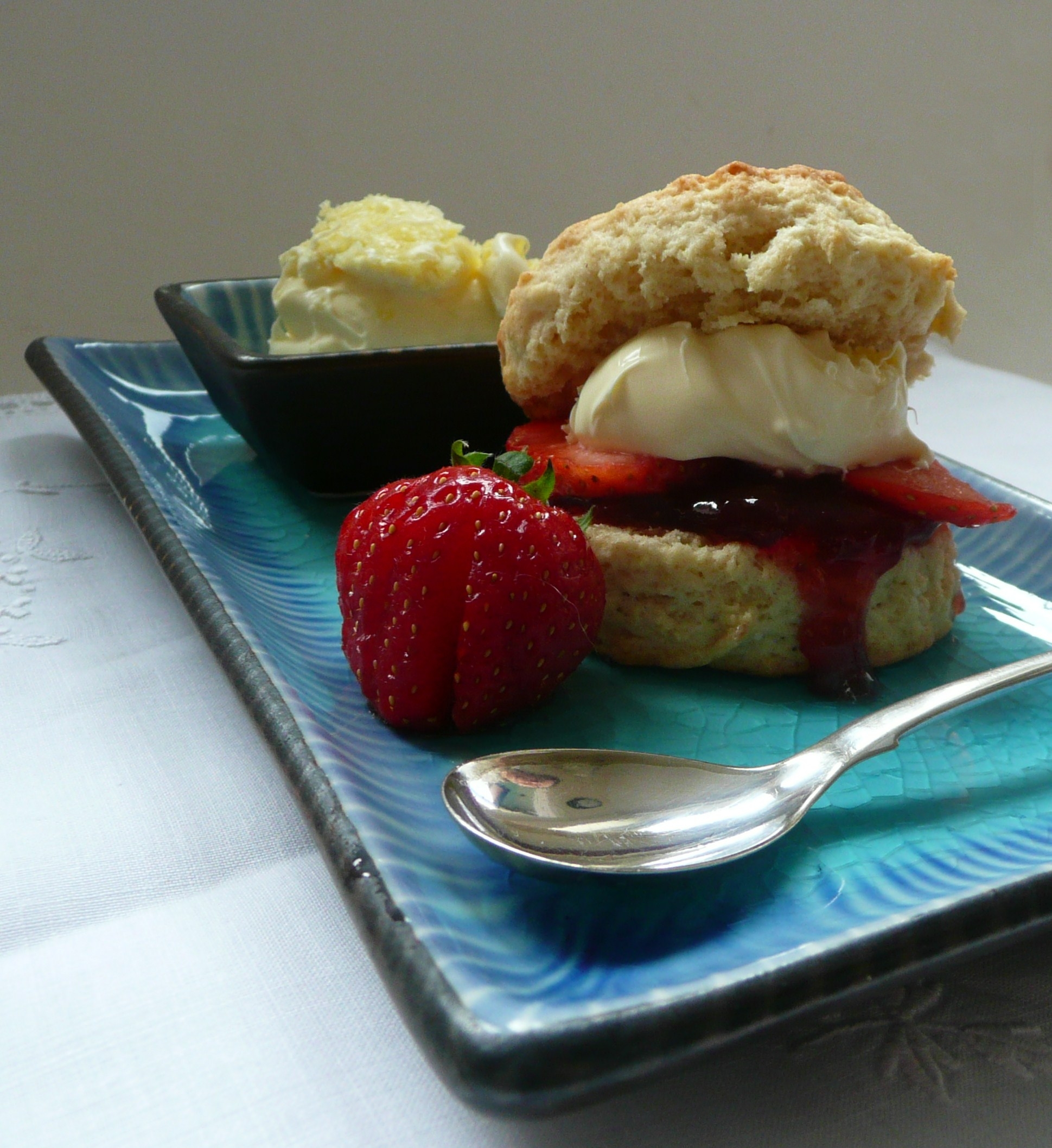
A cream tea is something quintessentially English. It consists of a pot of tea, a scone, a pot of strawberry jam and clotted cream.  A proper cream tea is with clotted cream; some establishments I have had the misfortune to visit have had the nerve to replace the clotted cream with whipped double cream or even more heinous – squirty cream, which is nothing short of an insult to the scone.  Nothing beats the thick heavenly, buttery clotted cream with its yellow crust.

Heating cream in shallow pans until a thick layer or clots of cream appear, creates clotted cream.  It has the texture and colour of soft butter with a slightly crusty top, with a very rich creamy taste.  It can be served with any dessert.  Clotted cream needs no whipping, its used straight from the container.    If golden syrup is added over the top it is known as thunder and lightning.

My brother used to live in Devon and whenever I went down to visit, top of our list of treats was a cream tea at Angel’s Tearooms.  We would sit outside in the enclosed courtyard looking across Lyme Bay.  A large pot of tea and a couple of clotted cream and jam scones were our regular order.  We would sit and watch the world go by whilst stuffing our faces, always discussing how our mother was missing out.  She hated cream teas.  Her choice would be to drink the tea and then with a swift and practised hand, would whip open her serviette and deftly wrap the scone into a neat parcel, which would then disappear into her handbag, to be eaten at leisure in the comfort of her home.  What actually happened was that the scone was forgotten and by the time it was found it was past eating so would end up stale and in the bin.  We don’t know where she got this nasty habit from because all of us, including my grandmother, were all great fans of the great English afternoon cream tea.

Scones

8oz/225g of self raising flour

pinch of salt

3oz/75g of butter cut into small squares

1 ½ oz/40g caster sugar

2 tbs milk

1 large egg

Put the flour and salt into a food processor and add the butter.  Whizz until it resembles very fine breadcrumbs.  Add the caster sugar and mix.

Beat the egg with 2 tbs milk and add to the flour mixture and whiz for a minute.  If it hasn’t formed a dough ball add a little more milk, you can add but you can’t take away so be sparing.

Turn the dough onto a floured surface and form a ball.  Roll the ball with a floured rolling pin to a 1-inch thickness this is not the point to be mean.  Better to have 8 fabulous scones than 10 not so fabulous.  I don’t guess I get out the ruler.

With a 2 inch/5cm cutter cut out the scones and place them on a baking tray.  Once the cutter has gone into the dough do not twist just make a clean cut and put them onto the baking tray.  I have found giving the cutter a squeeze or shake usually dislodges the scone.  When the dough is used up gently reform the left over dough and repeat until it’s all used up.

Brush the scones with milk and place in the oven Gas mark 7/425C/220C for 10-12 minutes.  After 10 minutes check to see how they are doing, they should be risen and a golden brown on top, if not leave them in for a few more minutes.   Remove and leave on a wire rack to cool.

Scones are lovely warm with clotted cream and strawberry jam.  I put a couple of slices of fresh strawberry on top of the jam so that I can fit a maximum amount of clotted cream.

The only down side is that they don’t keep well.  They tend to go hard and dry.